
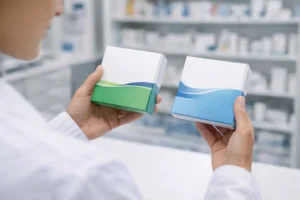
 Generic medicines are pharmaceutical products created to be the same as an already marketed brand-name drug in dosage form, safety, strength, route of administration, quality, performance characteristics, and intended use. The primary relationship between generic drugs and brand-name medicines is one of therapeutic equivalence; they function identically in the body. When a pharmaceutical company develops a new drug, it is granted a patent to protect its investment, allowing exclusive selling rights for a set period. Once this patent expiration occurs, other manufacturers can develop pharmaceutical generics. This market entry of generics introduces competition, which significantly lowers the price of the medication for the general public. While the brand-name drug is the pioneer, the generic version provides the same medical benefit after the legal protections end. This transition from brand to generic is a standard cycle in the generics pharmaceuticals industry, ensuring that life-saving treatments become more affordable over time. By providing a clear definition of generic medicines, health authorities help patients understand that these products are not “lower quality” but rather “off-patent” versions of the original. Consequently, the availability of these bioequivalent drugs ensures that the same active pharmaceutical ingredients remain accessible to a much broader demographic of patients worldwide, regardless of their financial status or insurance coverage limits.
What Are Generic Medicines?
Generic medicines are essential tools in modern clinical practice, defined as medications that contain the exact same active ingredients as their brand-name counterparts. The relationship between generic drugs and brand-name medicines is strictly regulated to ensure that the patient receives the same therapeutic effect. A brand-name drug is protected by patents that prevent other companies from making or selling it for many years. However, once patent expiration and market entry of generics occur, the landscape changes. Multiple manufacturers can then produce pharmaceutical generics, leading to a significant decrease in the cost of treatment. This process does not mean the medicine is a copycat of lower standards; rather, it is a bioequivalent drugs option that has met rigorous testing. Understanding brand vs generic drugs is crucial for patients, as the only major differences are often the price and the inactive ingredients like fillers or coloring. The generics pharmaceuticals sector plays a vital role in the global economy by ensuring that after the period of innovation-based exclusivity, the knowledge becomes a public good. This mechanism encourages original developers to keep innovating while providing a sustainable pathway for existing treatments to reach every corner of the healthcare system effectively and safely.
Importance of Generics in Healthcare Systems
The importance of generic medicines within global healthcare systems cannot be overstated, as they are the backbone of improving access to essential medicines. By providing a low-cost alternative to expensive originals, generic drugs ensure that life-saving treatments are available to low-income populations and developing nations. One of the most significant impacts is reducing healthcare and patient costs; when pharmaceutical generics enter the market, prices can drop by as much as 80% or 90%. This price reduction is vital for supporting the sustainability of healthcare budgets, allowing governments and insurance providers to allocate funds to other critical areas like research or infrastructure. In many countries, the use of bioequivalent drugs is the only way to manage the rising costs of chronic disease treatments. Without the generics pharmaceuticals industry, many public health programs would face bankruptcy due to the high price of proprietary labels. Furthermore, the competition between brand vs generic drugs drives the entire market toward efficiency. By making healthcare more affordable, generics contribute to better patient adherence, as individuals are more likely to fill their prescriptions when the out-of-pocket cost is manageable. Thus, they serve as a cornerstone for universal health coverage and equitable medical care.
Generics vs Brand-Name Medicines
When evaluating brand vs generic drugs, it is important to realize that they are designed to work in the exact same way. While they may look different, their core medical function is identical.
Therapeutic Equivalence
Therapeutic equivalence is the standard that ensures generic medicines provide the same clinical effect as the original. To be approved, generic drugs must have the same active ingredient, strength, and dosage form as the brand-name product. This means that if a brand-name tablet contains 500mg of a specific compound, the pharmaceutical generics version must also contain 500mg. Regulatory bodies require that bioequivalent drugs demonstrate the same expected clinical outcomes and safety profile. Patients can switch from a brand to a generic with the confidence that the treatment will be just as effective in managing their condition.
Differences in Appearance and Excipients
Although the active ingredients are the same, there are often variations in color, shape, and inactive ingredients between brand vs generic drugs. These inactive substances, known as excipients, include binders, flavors, and preservatives. Trademark laws often prevent pharmaceutical generics from looking exactly like the brand-name version. However, these differences do not affect effectiveness or safety for the vast majority of patients. While some individuals may have specific allergies to an inactive dye, the pharmacological action of the bioequivalent drugs remains unchanged, ensuring that the primary health benefit is consistently delivered regardless of the pill’s physical appearance.
Regulatory Requirements for Generic Medicines
The approval pathways for generic medicines are rigorous and thorough, ensuring that they meet the same high standards as any other medication. Unlike new drugs, manufacturers of generic drugs do not need to repeat animal and clinical (human) trials on safety and efficacy, as these were already proven by the brand-name developer. Instead, they must perform bioequivalence studies and quality standards tests. These studies prove that the bioequivalent drugs release the active ingredient into the bloodstream at the same rate and in the same amount as the original. The role of regulatory authorities in ensuring safety, such as the FDA or EMA, involves a detailed review of the manufacturing process and the drug’s chemistry. Pharmaceutical generics must be produced in facilities that meet strict guidelines. By focusing on bioequivalence, the regulatory system allows for a faster and less expensive route to market, which is why generics pharmaceuticals are more affordable. Every batch of generic medicines is subject to oversight to ensure that the public receives a product that is safe, effective, and interchangeable with the more expensive brand-name version, maintaining total trust in the pharmaceutical supply chain.
Manufacturing and Quality Control of Generics
The production of generic medicines follows the exact same stringent rules as brand-name drugs, specifically compliance with GMP standards (Good Manufacturing Practice). This ensures that every facility producing generic drugs is designed for safety and consistency. Quality control involves rigorous testing for consistency, purity, and batch control, meaning that every pill produced today must be identical to the one produced last month. Pharmaceutical generics manufacturers must invest heavily in laboratory testing to ensure no contaminants are present. Furthermore, inspection and audit requirements are a regular part of the industry. Regulatory agencies conduct unannounced visits to factories worldwide to verify that bioequivalent drugs are being made under the correct conditions. In the generics pharmaceuticals sector, any deviation from the approved formula can lead to immediate recalls and legal action. This high level of oversight ensures that the distinction in brand vs generic drugs is purely economic and aesthetic, not qualitative. By maintaining these strict manufacturing protocols, the industry ensures that patients receive high-quality medication that meets international purity standards, fostering global confidence in the efficacy of affordable pharmaceutical solutions across all therapeutic categories.
Role of Generics in Pharmaceutical Supply Chains
Generic medicines play a critical role in stabilizing global logistics by increasing supply flexibility and availability. When multiple companies produce generic drugs, the market is no longer reliant on a single manufacturer, which is essential for reducing dependency on single suppliers. This diversification is a major contribution to shortage mitigation strategies; if one factory faces a technical issue, other pharmaceutical generics providers can step in to fill the gap. The presence of bioequivalent drugs ensures that hospitals and pharmacies have a constant flow of medication even during global crises or trade disruptions. The generics pharmaceuticals industry often operates on a massive scale, allowing for the rapid distribution of essential treatments. By comparing brand vs generic drugs in a supply chain context, it becomes clear that generics provide a “safety net” for public health. Their widespread production across different geographic regions makes the entire healthcare infrastructure more resilient. This strategic redundancy prevents price spikes during shortages and ensures that patients do not have to interrupt their treatment due to stock-outs. Consequently, a robust market for generics is a prerequisite for a secure and functional national health system.
Common Misconceptions About Generic Medicines
Despite their proven track record, there are often effectiveness and safety concerns surrounding generic medicines. Some patients and even providers mistakenly believe that because generic drugs are cheaper, they must be of lower quality or less potent. Addressing patient and provider perceptions is a key task for health educators. It is vital to communicate that the lower cost of pharmaceutical generics is due to the lack of “start-up” research costs, not a reduction in ingredient quality. The importance of education and transparency cannot be ignored, as trust is the foundation of medical adherence. When people understand that bioequivalent drugs are legally required to be as strong and safe as the original, they are more likely to accept the switch. In the debate of brand vs generic drugs, the science clearly shows no clinical difference in most cases. Professionals in the generics pharmaceuticals field work hard to debunk myths by sharing data from regulatory audits and bioequivalence trials. Clear communication helps eliminate the “placebo effect” where a patient might feel a drug is less effective simply because it looks different or costs less, ensuring that everyone benefits from the savings generics provide.
Future Outlook for Generic Medicines
The future of generic medicines is marked by a growing demand driven by aging populations who require more long-term medication for chronic conditions. As more biological drugs lose their patents, we are seeing a massive expansion into complex generics and biosimilars. Unlike simple chemical generic drugs, biosimilars are more complex to produce, but they represent the next frontier in affordable medicine. The strategic importance for global healthcare access will only increase as healthcare costs continue to rise worldwide. The generics pharmaceuticals industry is evolving to include sophisticated delivery systems, such as inhalers and injectable pens, which were previously only available as brands. This evolution ensures that the gap in the brand vs generic drugs debate continues to close, offering patients high-tech treatments at a fraction of the cost. As regulatory pathways for these complex bioequivalent drugs become more streamlined, more patients will gain access to advanced therapies for cancer, autoimmune diseases, and rare disorders. The continued growth of pharmaceutical generics is essential for the financial survival of modern medicine, making the global goal of affordable healthcare for every citizen a reachable reality through innovation and fair competition.