
How Should Hospitals Evaluate Oxygenator Supply Risk Before Cardiac Procedure Planning?

Home Blog Oxygenator availability must be treated as a clinical readiness issue, not simply as a purchasing task. A hospital may have a confirmed operating schedule, trained personnel, and an available heart-lung machine yet still face a procedure delay if the correct oxygenator cannot be secured, released, and matched to the planned circuit. Effective oxygenator […]
What Should Hospitals Check Before Ordering Shortage-Prone Surgical Devices?

Home Blog Shortages can force hospitals to make purchasing decisions under significant time pressure, but availability should never replace clinical suitability, regulatory compliance or supply-chain transparency. Before ordering shortage-prone surgical devices, procurement teams should confirm actual demand, product specifications, compatibility, supplier authorization, documentation, stock status, shelf life and delivery conditions. A device that is available […]
How Should Healthcare Buyers Respond to FDA Medical Device Shortage Signals in 2026?

Home Blog Medical device shortages can move quickly from a regulatory update to postponed procedures, unsafe substitution pressure and unplanned cost. Buyers therefore need a structured response that connects FDA information with item-level inventory, clinical priorities, supplier capacity and internal authorization. For teams reviewing the FDA Medical Device Shortage 2026 landscape, the first objective is […]
How Should NGOs Standardize Medical Supply Kits for Field Operations?
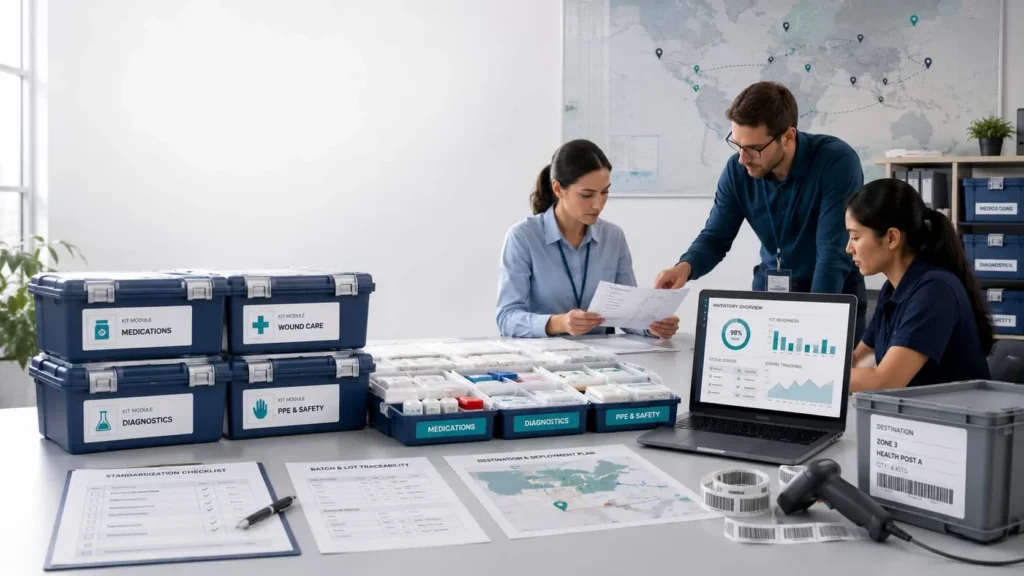
Home Blog Field operations require medical supply planning that is consistent, practical and adaptable to changing conditions. For NGOs, the challenge is not only to procure products, but to make sure each field team receives the right supplies, in the right quantity, with clear labeling, reliable documentation and usable packaging. A standardized kit structure helps […]
How Can Medical Buyers Reduce Stockout Risk During Seasonal Demand Peaks?
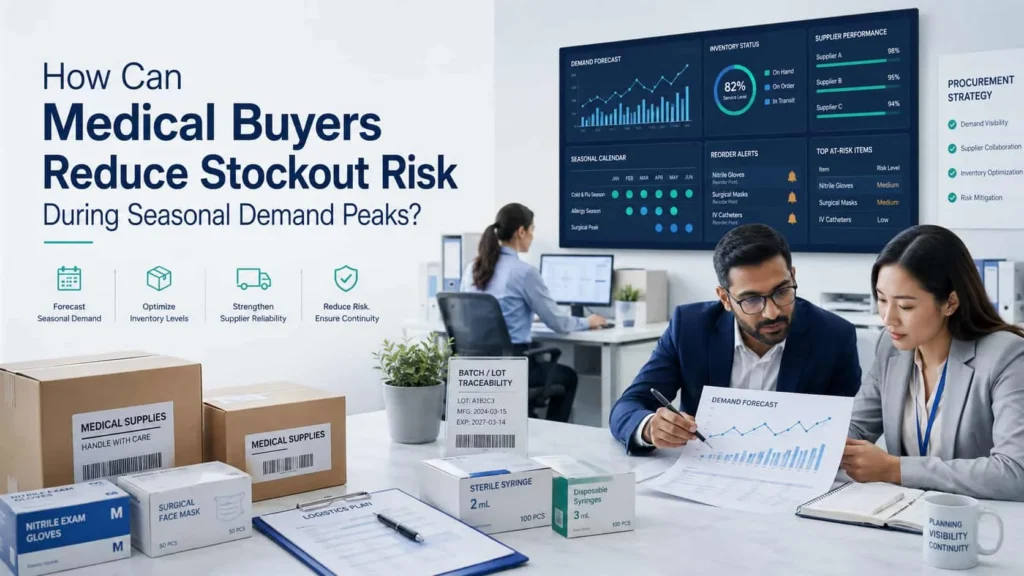
Home Blog Seasonal demand changes can place serious pressure on healthcare purchasing teams, especially when product usage rises faster than expected or supplier lead times become less predictable. During these periods, hospitals, clinics, NGOs and healthcare distributors need to secure essential products without creating unnecessary overstock, expiry exposure or budget inefficiency. For medical buyers, the […]
What Is the Role of Batch-Level Traceability in Healthcare Product Sourcing?

Home Blog In regulated healthcare procurement, every product must be identifiable beyond its commercial name or catalogue code. Buyers need to know which batch was supplied, where it came from, which documents support it, how it was handled, and whether it can be isolated if a quality concern appears. This is why batch-level traceability plays […]
How Can Buyers Verify Shelf-Life Requirements Before International Pharmaceutical Orders?

Home Blog Before placing cross-border medicine requests, buyers need more than price, stock confirmation, and shipment timing. They need a clear method for verifying shelf-life requirements before a purchase order becomes binding. In regulated healthcare supply, the expiry date printed on the pack is not enough on its own; the buyer must understand the product’s […]
How Do Procurement Teams Assess MOQ Risks in Pharmaceutical Sourcing?

Home Blog Minimum order quantity requirements can influence cost, inventory availability, storage capacity and product usability throughout a pharmaceutical supply chain. Procurement teams must therefore look beyond the supplier’s unit price and determine whether the required volume matches actual demand. A discounted price may appear attractive, but the commercial advantage disappears when products remain unused, […]
What Are the Key Risks in Multi-Supplier Healthcare Procurement?

Home Blog Healthcare organizations may work with several suppliers to access a broader product range, compare commercial terms and reduce dependence on a single source. However, multi-supplier healthcare procurement also introduces operational complexity. Each supplier may follow different quality procedures, documentation formats, production schedules and shipping practices. Without centralized control, these differences can affect product […]
What Should Be Checked Before Sourcing Products for a New Hospital Department?

Home Blog Opening a new hospital department requires more than purchasing a standard list of medical products. Procurement teams must understand how the department will operate, which clinical procedures will be performed, how many patients will be served and what infrastructure will support daily workflows. Decisions made at this stage directly affect clinical safety, staff […]